

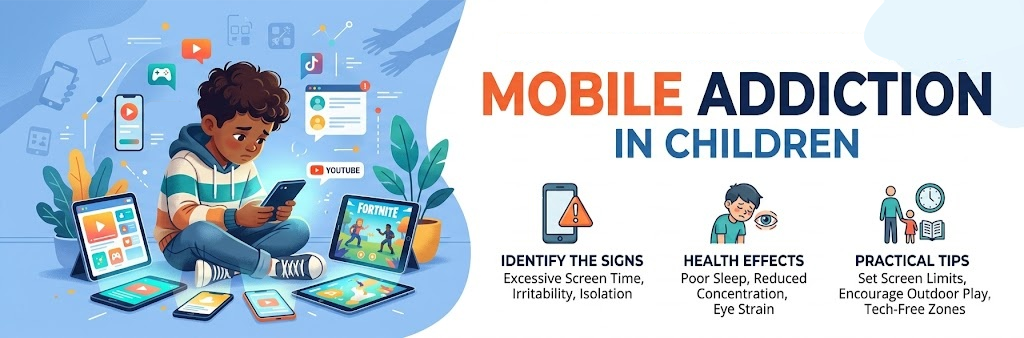
In today’s digital world, smartphones have become an essential part of our lives. While they offer convenience, learning opportunities, and entertainment, excessive mobile use among children is becoming a growing concern.
Many parents struggle to balance technology use, often noticing behavioral changes when devices are taken away. This raises an important question:
👉 When does normal usage turn into mobile addiction?
What is Mobile Addiction?
Mobile addiction refers to the compulsive and excessive use of smartphones, where a child feels anxious, restless, or irritated without access to their device.
It’s not just about time spent — it’s about dependency and loss of control.
Signs of Mobile Addiction in Children
Recognizing early signs can help prevent long-term issues. Watch out for:
🚩 Behavioral Signs
- Irritability when not using the phone
- Loss of interest in offline activities
- Avoiding social interaction
🧠 Mental Signs
- Reduced attention span
- Difficulty focusing on studies
- Constant urge to check the phone
😴 Physical Signs
- Poor sleep habits
- Eye strain and headaches
- Lack of physical activity
Effects of Excessive Mobile Use
1. Impact on Mental Health
Children may experience anxiety, mood swings, and even early signs of depression due to overexposure to screens and social media.
2. Academic Decline
Constant distractions from games and notifications reduce focus and productivity.
3. Social Isolation
Children may prefer virtual interactions over real-life relationships, affecting emotional development.
4. Physical Health Issues
- Poor posture
- Obesity due to inactivity
- Sleep disorders
Why Are Children Getting Addicted?
- Easy access to smartphones
- Engaging apps and games designed to hold attention
- Lack of clear boundaries at home
- Parents’ own screen habits (children imitate behavior)
How Parents Can Manage Mobile Usage
✅ 1. Set Clear Screen Time Limits
Create daily limits for device usage based on age.
✅ 2. Encourage Offline Activities
Promote hobbies like sports, reading, and creative play.
✅ 3. Create “No Phone” Zones
Keep devices away during:
- Meals
- Study time
- Before bedtime
✅ 4. Be a Role Model
Children copy what they see. Reduce your own screen time.
✅ 5. Use Parental Controls
Monitor and manage app usage to ensure safe digital habits.
Healthy Digital Habits for Children
- Follow a consistent daily routine
- Balance screen time with physical activity
- Encourage meaningful content over passive scrolling
- Teach responsible digital behavior